Published by Acre Commercial (ACRE) | August 2026 | Spokane, WA
Estimated read time: 8 minutes | Category: Development & Redevelopment
Downtown Spokane holds two markets inside the same few blocks. Metro office vacancy closed Q2 2026 at 7.2%, less than half the national rate. Inside the central business district, vacancy runs near 28%, a figure that puts the core well above the record 21% national office vacancy Moody’s recorded in Q1 2026.
That gap has produced the most interesting development activity in the Inland Northwest. Developers have spent the past several years converting downtown commercial buildings into housing, and the pipeline has reached a scale that changes the arithmetic for anyone holding older office product in the core. The Spokane Business Association counted roughly 1,000 new housing units in the downtown core, with nearly 547 finished and 504 under construction as of mid-2026.
For owners, developers, and investors, the question has moved past whether conversion works in Spokane. It works. The useful question now is which buildings pencil, what the incentives actually cover, and how the removed inventory affects everything left standing.
The Projects Setting the Benchmark
The Peyton Building anchors the current wave. The seven-story historic structure is undergoing a $33 million redevelopment into a 96-unit mixed-use apartment building, adding a climbing wall, a library, and a two-story atrium. Construction began in October, completion arrived in March 2026, and residents were expected to begin moving in as early as summer 2026 under the Peyton Lofts name.
Preliminary plans for the Crescent Building and the Fidelity Building call for converting 80,000 square feet of office space into 42 total units between them. That works out to roughly 1,900 square feet of gross building area per unit, a useful benchmark for anyone modeling a similar structure.
Earlier conversions established the template. The Marjorie Apartments, the Chronicle Apartments, the M Apartments in the former Macy’s department store, and 508 West all moved commercial buildings into residential use, and each one gave lenders and appraisers a local comparable that did not exist a decade ago.
Why Spokane’s Older Buildings Convert More Easily Than Most
The physical characteristics that make conversion feasible are specific, and Spokane’s downtown happens to have them.
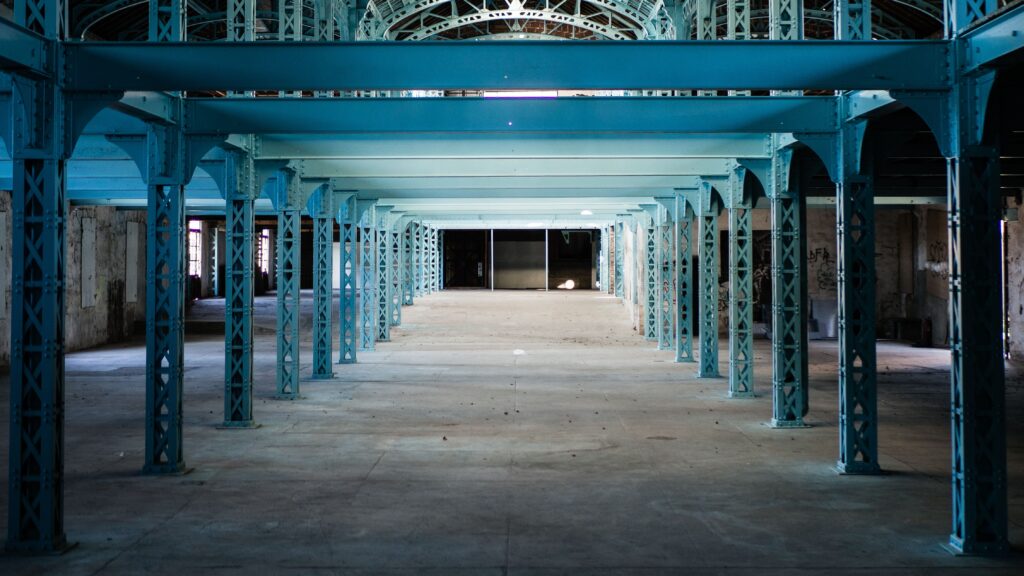
Floor plate depth governs everything. A residential unit needs natural light, which limits how far a bedroom can sit from an exterior window, generally around 30 feet. Buildings from the early twentieth century were designed before air conditioning and deep-plan office layouts, so they carry narrow floor plates, high ceilings, and operable windows on multiple exposures. The Peyton Building and its contemporaries in the Spokane core fit that profile.
Plumbing risers present the larger cost. An office floor might serve 40 people from two restroom cores. The same floor as apartments needs a kitchen and bathroom in every unit, which means new vertical stacks running the height of the building. Structural coring for those stacks drives a significant share of conversion budgets.
Post-1970 buildings with deep floor plates, sealed curtain walls, and centralized mechanical systems convert at costs that rarely support the finished rent. Those buildings need a different plan.
What Spokane’s Incentive Stack Covers
Two city programs make the difference between a project that stalls and one that closes financing.
The Multifamily Tax Exemption, authorized under Chapter 84.14 RCW, exempts the residential improvement value from property tax for a defined term on projects delivering at least four units. Conversion and rehabilitation both qualify, which puts adaptive reuse squarely inside the program’s intent.
Spokane’s Commercial Conversion Incentive applies the construction sales tax exemption to qualifying projects, and the city allows it to be layered with MFTE. On a $33 million redevelopment, the combined savings run into the millions and often determine whether a capital stack closes.
Anyone evaluating a downtown building should confirm current program terms with the City of Spokane’s economic development office before underwriting the benefit. Eligibility criteria, exemption periods, and affordability requirements change through the legislative cycle, and the incentive value belongs in your model only once you have verified it applies to your specific address.
The Cost Side Has Moved Against Developers
Conversion economics tightened considerably in 2026. Nonresidential construction input prices rose at a 12.6% annualized rate through the first two months of the year, driven by energy, copper, lumber, and steel, before the full effect of the spring energy shock registered in the data. Tariffs on imported steel and aluminum reaching 50% under expanded Section 232 authority added 5% to 25% to affected material categories, aggregate construction costs could rise roughly 8% under current policy conditions. Contractors report ongoing difficulty filling positions, with the industry short roughly 500,000 workers nationally.
Rent has moved more slowly. Spokane multifamily asking rent reached $1,395 per unit in Q2 2026, up 0.6% year over year, with vacancy at 7.3%. A conversion underwritten in 2023 on 4% annual rent growth and 2023 construction pricing is a different project today.
The buildings still working through this environment share a common trait: they were acquired at a basis that reflects 28% submarket vacancy. Acquisition price is doing much of the work that rent growth used to do.
What Conversion Does to the Buildings Left Behind
Every unit of office space removed from the downtown inventory helps the space that remains. Spokane’s core carries far more office square footage than current demand supports, and conversion is the only mechanism actively reducing that supply. Demolition is rare, and new office construction downtown has effectively stopped.
Residential occupancy also changes the demand base for ground-floor retail. Downtown Spokane retail has struggled because it depends on daytime office population for foot traffic, and hybrid work reduced that population permanently. A thousand residents living in the core generate evening and weekend spending, which improves the case for restaurants, groceries, and services along those blocks.
Institutional purchases contribute as well. Spokane Public Schools acquired the Riverpoint One building for $12 million in January 2026, taking another block of office inventory into owner-occupied use.
For an investor holding Class B office downtown, this trend is the most credible path to recovery in the core, on a timeline measured in years.
Frequently Asked Questions: Office Conversion in Downtown Spokane
What is the office vacancy rate in downtown Spokane?
Downtown Spokane office vacancy runs approximately 28%, driven by hybrid work adoption and public safety concerns in the central business district. The broader Spokane metro office market ran 7.2% vacancy in Q2 2026. Demand has concentrated in peripheral submarkets including Liberty Lake, North Spokane, and South Hill, where parking and amenities are easier for tenants.
How much does it cost to convert an office building to apartments in Spokane?
The Peyton Building redevelopment carried a $33 million budget for 96 units, which works out to roughly $344,000 per unit including acquisition, historic rehabilitation, and amenity construction. Costs vary widely with building age, floor plate geometry, and the condition of existing mechanical, electrical, and plumbing systems. Projects requiring extensive new plumbing risers and structural coring sit at the higher end of the range.
What incentives does Spokane offer for converting commercial buildings to housing?
Spokane offers a Multifamily Tax Exemption under Chapter 84.14 RCW, which exempts residential improvement value from property tax for a defined period on projects of at least four units, including conversions. The city also offers a Commercial Conversion Incentive applying the construction sales tax exemption, and the two programs can be layered. Verify current eligibility terms with the City of Spokane before relying on the benefit in your underwriting.
Which downtown Spokane buildings work best for residential conversion?
Buildings constructed before roughly 1960 tend to convert most efficiently, because narrow floor plates place every unit within about 30 feet of an exterior window and operable windows reduce mechanical requirements. High ceilings, structural masonry, and historic tax credit eligibility improve the case further. Deep-plan buildings from the 1970s onward, with sealed curtain walls and centralized HVAC, generally cost more to convert than the finished residential rent supports.
How Acre Commercial Helps Developers and Owners Evaluate Conversion Potential
Acre Commercial works across Spokane, Spokane Valley, Kennewick, Post Falls, and Rathdrum, with development advisory, market analytics, and investment services supporting redevelopment work. For downtown owners, we model what a building is worth in continued office use against what it supports as a conversion candidate, using current construction pricing and local rent comparables.
The best conversion candidates change hands quietly. We know which downtown owners are approaching a decision and which assets have the floor plate geometry for a viable project.
If you own office property in the Spokane core and have wondered whether conversion belongs in your plan, that analysis is worth running before your next major capital expenditure.
Contact Acre Commercial: 43560.com
Downtown Spokane is working through an inventory problem that took two decades to build. The conversion pipeline has proven the model, the incentive programs are in place, and the units delivering through 2026 will bring residents into blocks that emptied out at five o’clock for years.
Owners who know which category their building falls into can act on it now.